Buscador del blog: Bands, ALbums, Links, full comics, soundtracks.. etc..

Mostrando entradas con la etiqueta noel redding. Mostrar todas las entradas

miércoles, 1 de diciembre de 2021

Interview Noel Redding by Rock N Roll comics directed by Jay Allen Sandford 1993 never before on internet:


JAY: - As I am an opportunist and a very nervous rock scholar, I requested an in-depth interview. What follows are some highlights, starting with the early days. Young Noel learned to play the violin, then the banjo and the guitar, and at age 16 he attended art school in London, where he studied commercial art before deciding to pursue a musical career, playing with The Modern Jazz Group and The Burnetts -


NOEL: All the groups at that time played in Germany. It wasn't a good job, but at least it was average, £ 30 a week. The Beatles had made it very fashionable, but you played these big clubs from 7 to 2 every night, in addition to matinees! We did it for a couple of years.


JAY: Were they all consciously influenced by the Beatles musically as well?


NOEL: In Germany at that time, we were expected to play Beatles songs, because that was what was on the hit list. While we were there, our mothers sent us a new single once a month so we could learn it. The Germans expected the top 40, like the Rolling Stones. Then we started to play some blues, which was appreciated by many Germans, especially in Frankfurt. Frankfurt especially. They just wanted us to keep them entertained for about seven hours.


JAY: Then you did three singles with The Loving Kind. I know you had some kind of management problem, but how did you go from there to auditioning for The Animals?


NOEL: I basically left the group and thought about becoming a drummer as there weren't many at the time ... I saw an ad on Melody Maker that Eric Burdon was doing these auditions. I went and played the guitar, and Chas Chandler asked me to try playing the bass. Jimi was in the building that day.


JAY: Have you ever heard of him, or heard of him?


NOEL: Nothing at all. It was all a bit strange, because he had never played bass. Jimi came and we only did three songs, no vocals or anything. Very little was said. Afterward, Jimi asked me if he wanted to go down to the pub. There Jimi would ask me about English music and I would ask him about the American scene. Then he asked me if he wanted to join his new group.


JAY: Was the concept, from the beginning, to be a three-piece band?


NOEL: Well, it wasn't known at the time because at the beginning there was a keyboard player with us. Everything was very open and unspoken. I think I just wanted the right mix of musicians, the perfect chemistry.

JAY Was there any feeling, any premonition, that in a few weeks they would be playing Olympus and breaking attendance records across Europe?


NOEL: Not really. Everything went very fast. First, we went through a series of drummers over the course of a week or so, before finding Mitch Mitchell. Then Chas tossed a coin and we ended up going to a concert in France, to do three tunes. At the time, I didn't realize that everything would go so fast, but I DID realize that we were doing something totally DIFFERENT.


JAY: Tell us about the unfortunate tour that found you playing in support of the Monkees.


NOEL: Personally, I think it was a lot of fun. We were traveling in a private plane, with our Monkees badges and all. We did not go well with the public, but we did what we could. As for the promotion, I thought it was a great way for a lot of people to see us, but a lot of other people thought it was a bad decision. It wasn't ALL disastrous shows. Nobody was throwing things at us or anything like that. They were just eager to see the Monkees. It was nice, a bit of fun, and it created a bit of publicity, didn't it!


JAY: What was your perception of Monterey?


NOEL: First of all, it was my first time in America. It was an incredible moment for me. I sat next to Brian Jones, about whom I had just read a book. Besides, he was only 21 years old! There I was in San Francisco with Booker T And The MGs, Otis Redding, all my heroes! We stuck around and when we finally got on stage, after The Who, and Jimi did the part of it, it was the moment we took over America, I think. I don't think anyone knew I was going to set his guitar on fire. The scene in America at that time was very different from what you were used to in Europe. It must have been pretty overwhelming.


As an observation, at that time we did not have very long hair. Upon arriving in the United States, I realized that all the people were laughing at me on the street, pointing at my hair! It was a bit strange because I thought that the United States was the most advanced and progressive country in the world. But we got over it. The other thing: when we got to Monterey, people were hanging out in various "states", if you know what I mean, ha ha! It was the heart of the "hippies", a totally different scene from Europe. It was amazing ate right at Haight-Ashbury. I wish I had more time! She was too busy working and overwhelmed by everything.


JAY: You mention the different "states" that people were in. Not to insist on the dark side, but was it all bread and roses, or was the deadly undertone already starting to come into play? You know, the danger, the drugs ...


NOEL: No, everyone was quite happy, having a good time ... I mean, these things were illegal in Europe in those days. A few joints and uppers maybe, but that summer in America was, the year of LSD, right? While you were with the Hendrix Experience, you formed


JAY: You formed a four-member side band called Fat Mattress.


NOEL: That's right, two of the members were from The Loving Kind. In late '67, this was my songwriting outing, and Jimi seemed to think the idea was great. We all plan to have our side projects separate, to keep everyone happy, but also to keep the Experience going.


JAY: But then the Experience parted ways. Was the separation really planned to be temporary? Be sincere.


NOEL: Well, the Experience ended in June '69 when everyone went to do their own thing. The idea was that, in January or February, we were going to re-form the original Experience to do a great tour of America, Australia, Japan and Europe. But then around March, when we were supposed to start rehearsing again, I realized that Michael Jeffries was, well, at that point he was asking a lot of questions about finances, about where all the money was. I think they brought Billy Cox because I was asking a lot of questions.


JAY: The rumor is that you heard about Billy Cox and then he became the first to officially leave permanently, announcing that he was not coming back. Is this how it happened?


NOEL: Well, in 1969 there was talk of the "expansion" of the band. They hadn't asked me about it. Then in 1970, we were going to get together again, like I said, for this big tour. But by then I had become, I don't know, too big of a problem. They didn't want to deal with me any more than I wanted to deal with them.


JAY: In August 1969, while Jimi was appearing on The Tonight Show - without you - you were premiering Fat Mattress at the Windsor Jazz Festival. Which one was his


NOEL: "The idea was that, in January or February, we were going to reform the original Experience to do a great tour of America, Australia, Japan and Europe''


JAY: relationship with Jimi right now?


NOEL: Completely fine. When we met again in the early 1970s, there was no animosity. We did an interview with Rolling Stone and then when we got back from rehearsals, I found out from someone else that they had gotten to rehearse with Cox. It bothered me a lot because Hendrix didn't have the ... neck to tell me face to face.


JAY: I find it interesting that you switched to lead guitar back then.

NOEL: I wouldn't have tried to simulate Jimi's style because who could? I used the guitar while writing the songs, because it is easier to show someone the song with a guitar. There were also problems with Fat Mattress. We had a great discussion, about songwriting, I think. I must admit that after The Experience I was very tired, on the verge of collapse. We basically decided to call it quits, after doing the second album and a few dates to see if we could keep working together. That's when I was about to rejoin The Experience, but that never happened. I should have taken some time off.


JAY: Instead, you jumped into various session jobs. The one that comes to mind is Screaming Lord Sutch, with Jimmy Page, Bonham, Jeff Beck ...


NOEL: I did those sessions with him in Los Angeles, just putting my bass on top of the tape, and then a few more in London. It was kind of "play your bass here, thank you very much." You know, you have to pay the bills.


JAY: How about the pseudonym you used on the Randy California record? Kaptain Kopter. Why was "Clit MeTorious" contractually prohibited from using his real name?


NOEL: [Laughs] So he was hired by Motown. The drummer thought about it. He was originally going to call me "Henry Mankovitz", but they turned him around. I saw Randy again in 1990 in Paris and played with him, and he was in great shape that night.


JAY: He seems to be a very mercurial guy, who goes from one mood to another.


NOEL: "J kept a diary in which he reviewed the concerts, and there were many bad ones. The drugs and the exhaustion. He reached a point where he was very selfish ... Well, he is a Pisces, ha ha !


JAY: Then came the band The Road, which I understand didn't last long. Then you moved to Ireland at the end of '72.


NOEL: I still play with some of those guys. Les Sampson is my friend on a new project, as well as Dave Clark, who now plays guitar as well as keyboards. I just toured Sweden with Dave, Mick Avory from The Kinks, and Dave Rowberry from The Animals. We did some Kinks, some Animals, something Dave Clark and I have been writing, "Hey Joe." We are now playing Irish pubs. Looking for a record label?


I've done a few demos in the last couple of years. I've met a few people in New York and there seems to be some interest. It's difficult, since I basically disappeared around 1978.


JAY: Can you tell us about the effects of the various lawsuits you've been through?


NOE: I settled my lawsuit with the Hendrix estate around 1974, but I still had a dispute with the Michael Jeffries estate. There were also two other guys who had received an advance from RCA for $ 326,000, of which we got about $ 50,000. I had to take a loan from the bank, and then I was forced to settle the inheritance disputes. Financially, if you can't afford to keep fighting a lawsuit, you have to settle. In the end, he just had no money, to be honest.


JAY: Weren't you and Mitch involved in a Hendrix tribute band with Rand Hansen? It must have been a ghostly experience, reliving a time so far away. Did you do u because music was still a challenge to play?


NOEL: Well, I don't have to rehearse a lot, do I? [Laughs]


JAY: You need to live, you know what I mean? I'm not exactly fine, I don't get any artist royalties or


NOE: nothing like that. There is an interest, a nostalgia, I suppose. We played basically the same way The Experience did, totally and absolutely free. You have your basic format for a song and, at any moment of a solo, you stretch out and then come back whenever. We stretch out a bit, musically Mitch and I have done it at separate times but never together.


JAY: Did Jimi really "cast a spell on those two white guys, as they say in the movie? Was their relationship work-related or were they all on the adventure together?


NOEL: We were completely together. For a band, we got along really well. There were only a few problems, mainly because of the women or the music.


JAY: I guess you avoided beating around the bush, when it comes to secondary postures. It must have been difficult to see Jimni becoming more and more tied up


NOEL: He was. He was going to his hotel room, and he wasn't there. There were all kinds of people getting room service and smoking all those joints, etcetera, etcetera, and I could tell it was getting, you know, a little off. But what could I say? It also affected performances. He kept a diary in which he reviewed the concerts, and there were a lot of bad ones. The drugs and the exhaustion He got to a point where he was very selfish, and I don't like that. I think she was in Devonshire, there was a hum on the amp. He played with his back to the audience and then left. That is really embarrassing for me and Mitch. So he would say something to him, he would try to scold him and put it in my journal.


When he died, well, I saw him a couple of weeks before he passed away. It was great, we got along pretty well. I would like to think that things were in order, that nothing was left unsolved. That is what I would like to think.


JAY: - Noel and I chatted some more, about his fiancée, about Janis Joplin ("I never realized she was a junkie!"), Her life in Ireland ("There is no club scene except this new place called The Experience, ha ha! ") and their hopes for the future. "I would never do a tour of more than a month," he declares, "whatever happens! It's the only way to stay sane." About the extent of the legend that he has achieved, he speaks in a low voice. "I try not to think about it. I find it all a bit surreal. I mean I'm just one more bass player." -


But we all know that it is not so

Rock N Roll comics my collection JPG - including the lost issues of Janis Joplin and Grateful Dead nº1 + Entrevista Noel Redding en Español

Hoy traigo escaneados en JPG para que los podáis imprimir y leer (en inglés), los números más importantes de los Rock N Roll comics que salieron a finales de los 80s y principios de los 90s, unos de los pocos comics musicales que se han hecho y además sin autorización, osea no oficiales, imposibles de comprar, no re-editados. La mayoría los he podido conseguir por internet pero he tenido que comprar y escanear yo mismo algunos otros, me han costado un ojo de la cara pero merece la pena porque son documentos de la historia del rock únicos que dan un retrato contracultural de la propia contracultura, desmitificando muchos mitos y retratando cosas que no se suelen decir en la historia y documentales oficiales. Sinceramente y siendo black pill me creo más a estos comics fanmade y las cosas que he leído en ellos (muchas cosas que no sabía) que a la historia oficial de muchas de estas bandas, la realidad suele ser mucho más turbia de lo que parece, por eso no son oficiales y levantaron ampollas en su momento. Por ejemplo que me dirías si te digo que Bill Graham no era ningún gurú de la psicodelia sino simplemente un empresario capitalista en busca de pasta que se llevaba muy mal con los Dead precisamente por eso, o que a Janis Joplin no le gustaban mucho los hippies y que fue chivo expiatorizada/vampirizada por su propia banda o que le hacían bullying en la escuela jaja de verdad que seguramente todo eso es mas real que la historia oficial, o como sino tuvo tantos cambios de banda, tantos problemas con la heroína y tantas movidas. O que a Noel Redding le hicieron mobbing laboral jaja. Teniendo en cuenta estas cosillas red pill, empiezo a pensar que el papel de la URSS en el impulso del movimiento hippie en secreto puede que fuese incluso más grande de lo que nos pensamos


ACDC
AEROSMITH
AEROSMITH II
BOWIE
COOPER
DEF LEPPARD
DOORS
DYLAN
DYLAN 2
DYLAN 3
ELTON JOHN
GRATEFUL DEAD 1
GRATEFUL DEAD 2
GRATEFUL DEAD 3
JANIS JOPLIN
KISS
MOTLEY CRUE
OZZY OSBOURNE
PINK FLOYD
RUSH
SABBATH
SCORPIONS
STEWART
STONES
TUROK XVIII
VAN HALEN
WHITESNAKE
WHO
ZAPPA
ZEPPELIN
ZZ TOP

👀👀👀


pending stuff:

hard rock comics Jimi Hendrix And Motorhead/Megadeth

rock n roll comics
ERIC CLAPTON
YES
BEATLES EXPERIENCE
PETER GABRIEL


Además otra cosa que quiero recalcar es el tema que os he hablado muchas veces que las apariencias no engañan y que más vale pecar de hacer juicios prematuros con las personas a caer en trampas por tal de ignorar señales. Estos comics pese a estar guapísimos pienso que malgastaron demasiados ejemplares en artistas que no son ni de rock como Madona, Prince, Michael Jackson, Public Enemy.. y en otros grupos modernos muy comerciales que son mas bien mierda como Metallica o Gun N Roses.. pudiendo hacer números de Motorhead, Ted Nugent o Jimi Hendrix entre otros. Pues total que precisamente tuvieron problemas con este tipo de gente y Axel Rose demando a estos comics incluso llamo a sus oficinas insultándoles.. lo dicho si alguien parece gilipollas seguramente es porque es gilipollas, y precisamente por cosas así pues estos comics por culpa de vampiros psíquicos pues se toparon con muchos impedimentos. Y sin embargo artistas como Noel Redding que poca gente sabe ni quien es (bajista de hendrix) incluso llamo a las oficinas para hacer una entrevista y felicitarles. Metallica y Gun N Roses son bandas que pese a tener algún temilla medio bueno son basura, hiper comerciales, fabricas de narcisistas, publico también donde te puedes encontrar mucho posser y gente toxica.. mmm y anécdotas personales que como técnico conozco de estas bandas te puedo decir que son mierda de personas; estos comics en su buena fe trataron de hacerles tributo y se lo pagaron de la peor manera, me recuerda a cuando yo he colaborado con gente que medio me gustaba lo que hacian pero había algo que no me terminaba de encajar con ellos y al final resultaban ser millenials o algo


Entrevista Noel Redding en Español 1993:


JAY: - Como soy un oportunista y un estudioso del rock muy nervioso, solicité una entrevista en profundidad. Lo que sigue son algunas luces, empezando por los primeros días. El joven Noel aprendió a tocar el violín, luego el banjo y la guitarra, y a los 16 años asistió a una escuela de arte en Londres, donde estudió arte comercial antes de decidirse a seguir una carrera musical, tocando con The Modern Jazz Group y The Burnetts -


NOEL: Todos los grupos de aquella época tocaban en Alemania. No era un buen trabajo, pero al menos era regular, 30 libras a la semana. Los Beatles lo habían puesto muy de moda, pero tocabas en estos grandes clubes de 7 a 2 cada noche, ¡además de las matinés! Lo hicimos durante un par de años.


JAY: ¿Estaban todos conscientemente influenciados por los Beatles musicalmente también?


NOEL: En Alemania, en aquella época, se esperaba que tocáramos canciones de los Beatles, porque era lo que estaba en la lista de éxitos. Mientras estábamos allí, nuestras madres nos enviaban un nuevo single una vez al mes para que nos lo aprendiéramos. Los alemanes esperaban los 40 principales, como los Rolling Stones. Luego empezamos a tocar algo de blues, que era apreciado por muchos alemanes, especialmente en Frankfurt.  Frankfurt especialmente. Sólo querían que los mantuviéramos entretenidos durante unas siete horas.


JAY: Luego hicisteis tres singles con The Loving Kind. Sé que tuvisteis algún tipo de problema de management, pero ¿cómo pasasteis de ahí a la audición para The Animals?


NOEL: Básicamente dejé el grupo y pensé en convertirme en baterista, ya que no había muchos en ese momento... vi un anuncio en Melody Maker de que Eric Burdon estaba haciendo estas audiciones. Fui y toqué la guitarra, y Chas Chandler me pidió que intentara tocar el bajo. Jimi estaba en el edificio ese día.


JAY: ¿Habías oído hablar de él, o escuchado algo de él?


NOEL: Nada en absoluto. Fue todo un poco extraño, porque nunca había tocado el bajo. Jimi vino y sólo hicimos tres temas, sin voces ni nada. Se habló muy poco. Después, Jimi me preguntó si quería bajar al pub. Allí, Jimi me preguntaba por la música inglesa y yo le interrogaba sobre la escena americana. Entonces me preguntó si quería unirme a su nuevo grupo.


JAY: ¿El concepto era, desde el principio, ser una banda de tres miembros? 


NOEL: Bueno, no se sabía en ese momento porque al principio había un teclista con nosotros. Todo fue muy abierto y tácito. Creo que simplemente quería la combinación adecuada de músicos, la química perfecta.


JAY ¿Hubo alguna sensación, alguna premonición, de que en pocas semanas estarían tocando en el Olimpo y batiendo récords de asistencia en toda Europa?


NOEL: La verdad es que no. Todo fue muy rápido. Primero, pasamos por una serie de bateristas en el transcurso de una semana más o menos, antes de encontrar a Mitch Mitchell. Luego, Chas lanzó una moneda y terminamos yendo a un concierto en Francia, para hacer tres melodías. En ese momento, no me di cuenta de que todo iría tan rápido, pero SÍ me di cuenta de que estábamos haciendo algo totalmente DIFERENTE.


JAY: Háblanos de la desafortunada gira que os encontró tocando como apoyo a los Monkees.


NOEL: Personalmente, creo que fue muy divertido. Viajábamos en un avión privado, con nuestras insignias de los Monkees y todo. No nos iba bien con el público, pero hacíamos lo que podíamos. En cuanto a la promoción, pensé que era una forma estupenda de que nos viera mucha gente, pero mucha otra gente pensó que era una mala decisión. No fueron TODOS los espectáculos desastrosos. Nadie nos estaba tirando cosas ni nada por el estilo. Sólo estaban ansiosos por ver a los Monkees. Fue agradable, un poco divertido, y creó un poco de publicidad, ¡no es así!


JAY: ¿Cuál fue su percepción de Monterey?


NOEL: En primer lugar, fue mi primera vez en América. Fue un momento increíble para mí. Me senté al lado de Brian Jones, del que acababa de leer un libro. Además, ¡sólo tenía 21 años! Allí estaba en San Francisco con Booker T And The MGs, Otis Redding, ¡todos mis héroes! Nos quedamos tocando y, cuando finalmente salimos a escena, después de The Who, y Jimi hizo su parte, fue el momento en que nos apoderamos de América, creo. No creo que nadie supiera que iba a prender fuego a su guitarra. La escena en América en ese momento era muy diferente a la que estabas acostumbrado en Europa. Debió ser bastante abrumador.


Como observación, en aquella época no teníamos el pelo muy largo. Al llegar a Estados Unidos, me di cuenta de que toda la gente se reía de mí en la calle, ¡señalando mi pelo! Era un poco extraño porque yo pensaba que Estados Unidos era el país más avanzado y progresista del mundo. Pero lo superamos. La otra cosa: cuando llegamos a Monterey, la gente se paseaba en varios "estados", si sabes lo que quiero decir, ¡ja, ja! Era el corazón de los "hippies", una escena totalmente diferente a la de Europa. Fue increíble aterrizar justo en Haight-Ashbury. ¡Ojalá hubiera tenido más tiempo! Estaba demasiado ocupada trabajando y abrumada por todo.


JAY: Mencionas los diferentes "estados" en los que se encontraba la gente. No es por insistir en el lado oscuro, pero ¿era todo pan y rosas, o el trasfondo mortal ya empezaba a entrar en juego? Ya sabes, el peligro, las drogas...


NOEL: No, todo el mundo estaba bastante feliz, pasando un buen rato... Quiero decir, estas cosas eran ilegales en Europa en aquellos días. Unos cuantos porros y uppers tal vez, pero ese verano en América fue, el año del LSD, ¿no? Mientras estabas con la Hendrix Experience, formaste


JAY:  formaste una banda paralela llamada Fat Mattress, de cuatro miembros.


NOEL: Así es, dos de los miembros eran de The Loving Kind. A finales del 67, esta era mi salida para escribir canciones, y Jimi parecía pensar que la idea era genial. Todos planeamos tener nuestros proyectos paralelos por separado, para mantener a todos contentos, pero también para mantener la Experiencia.


JAY:  Pero entonces la Experiencia se separó. ¿Se planeó realmente que la separación fuera temporal? Sé sincero.


NOEL: Bueno, la Experiencia terminó en junio del 69 cuando cada uno se fue a hacer sus propias cosas. La idea era que, en enero o febrero, íbamos a volver a formar la Experience original para hacer una gran gira por América, Australia, Japón y Europa. Pero entonces, alrededor de marzo, cuando se suponía que íbamos a empezar a ensayar de nuevo, me di cuenta de que Michael Jeffries estaba, bueno, en ese momento estaba haciendo muchas preguntas sobre las finanzas, sobre dónde estaba todo el dinero. Creo que trajeron a Billy Cox porque yo estaba haciendo muchas preguntas.


JAY: El rumor es que usted oyó hablar de Billy Cox y que entonces se convirtió en el primero en salir oficialmente de forma permanente, anunciando que no iba a volver. ¿Es así como sucedió?


NOEL: Bueno, en 1969 se hablaba de la "ampliación" de la banda. No me habían preguntado al respecto. Luego, en 1970, íbamos a volver a reunirnos, como dije, para esta gran gira. Pero para entonces me había convertido, no sé, en un problema demasiado grande. Ellos no querían tratar conmigo más de lo que yo quería tratar con ellos.


JAY: En agosto de 1969, mientras Jimi aparecía en The Tonight Show -sin usted-, usted estrenaba Fat Mattress en el Festival de Jazz de Windsor. ¿Cuál era su


NOEL: "La idea era que, en enero o febrero, íbamos a reformar la Experience original para hacer una gran gira por América, Australia, Japón y Europa. "


JAY: ¿relación con Jimi en este momento?


NOEL: Completamente bien. Cuando volvimos a reunirnos a principios de 1970, no había ninguna animosidad. Hicimos una entrevista con Rolling Stone y luego, cuando volvimos de los ensayos, me enteré a través de otra persona, que habían conseguido ensayar con Cox. Me molestó mucho porque Hendrix no tuvo el... cuello de decírmelo cara a cara. 


JAY: Me parece interesante que hayas cambiado a la guitarra principal por aquel entonces.

NOEL: No habría intentado simular el estilo de Jimi porque, ¿quién podría? Utilicé la guitarra mientras escribía las canciones, porque es más fácil mostrarle a alguien la canción con una guitarra. También hubo problemas con Fat Mattress. Tuvimos una gran discusión, sobre la composición de las canciones, creo. Debo admitir que después de The Experience estaba muy cansado, al borde del colapso. Básicamente, decidimos darlo por terminado, después de hacer el segundo álbum y unas cuantas fechas para ver si podíamos seguir trabajando juntos. Fue entonces cuando estuve a punto de volver a unirme a The Experience, pero eso nunca sucedió. Debería haberme tomado un tiempo libre.


JAY: En lugar de eso, te metiste de lleno en varios trabajos de sesión. El que me viene a la mente es Screaming Lord Sutch, con Jimmy Page, Bonham, Jeff Beck...


NOEL: Hice esas sesiones con él en Los Ángeles, simplemente poniendo mi bajo encima de la cinta, y luego algunas más en Londres. Era una especie de "toca tu bajo aquí, muchas gracias". Ya sabes, tienes que pagar las facturas.


JAY: ¿Qué te parece el seudónimo que usaste en el disco de Randy California? Kaptain Kopter. ¿Por qué "Clit MeTorious" tenía prohibido por contrato usar su nombre real?


NOEL: [Risas] Entonces estaba contratado por la Motown. El baterista lo pensó. Originalmente iba a llamarme "Henry Mankovitz", pero le dieron la vuelta. Volví a ver a Randy en 1990 en París y toqué con él, y estaba en muy buena forma esa noche.


JAY: Parece ser un tipo muy mercurial, que va de un estado de ánimo a otro.


NOEL: "J llevaba un diario en el que repasaba los conciertos, y había muchos malos. La droga y el cansancio. Llegó a un punto en el que era muy egoísta... Bueno, es un Piscis, ¡ja!


JAY: Luego vino la banda The Road, que tengo entendido que no duró demasiado. Luego te mudaste a Irlanda a finales del 72.


NOEL: Todavía toco con algunos de esos tipos. Les Sampson está conmigo en un nuevo proyecto, así como Dave Clark, que ahora toca la guitarra además de los teclados. Acabo de hacer una gira por Suecia con Dave, Mick Avory de The Kinks, y Dave Rowberry de The Animals. Hicimos algo de los Kinks, algo de los Animals, algo que Dave Clark y yo hemos estado escribiendo, "Hey Joe". Ahora estamos tocando en pubs irlandeses. ¿Estás buscando un sello discográfico?


He hecho algunas demos en el último par de años. Me he reunido con algunas personas en Nueva York y parece que hay cierto interés. Es difícil, ya que básicamente desaparecí alrededor de 1978.


JAY: ¿Puede hablarnos de los efectos de los distintos pleitos por los que ha pasado?


NOEL: Resolví mi pleito con el patrimonio de Hendrix alrededor de 1974, pero todavía tenía un litigio con el patrimonio de Michael Jeffries. También había otros dos tipos que habían recibido un adelanto de RCA por 326.000 dólares, de los que obtuvimos unos 50.000 dólares. Tuve que pedir un préstamo al banco, y luego me vi obligado a resolver los litigios contra las herencias. Desde el punto de vista financiero, si no puedes permitirte seguir luchando contra un pleito, tienes que llegar a un acuerdo. Al final, simplemente no tenía dinero, para ser honesto.


JAY: ¿No estuvieron usted y Mitch involucrados en una banda tributo a Hendrix con Rand Hansen? Debe haber sido una experiencia fantasmal, revivir una época tan lejana. ¿Hicisteis u porque la música seguía siendo un reto para tocar?


NOEL: Bueno, no tengo que ensayar mucho, ¿verdad? [Risas] 


JAY: Uno necesita vivir, ¿sabe lo que quiero decir? No estoy exactamente bien, no recibo ninguna regalía de artista ni


NOEL: nada de eso. Hay un interés, una nostalgia, supongo. Tocamos básicamente de la misma manera que lo hacía The Experience, total y absolutamente libre Tienes tu formato básico para una canción y, en cualquier momento de un solo, te extiendes y luego vuelves cuando sea. Nos extendemos un poco, musicalmente Mitch y yo lo hemos hecho en momentos separados pero nunca juntos.


JAY: ¿Realmente Jimi "hechizó a esos dos chicos blancos, como se dice en la película? ¿Su relación era de tipo laboral o estaban todos juntos en la aventura?


NOEL: Estábamos completamente juntos. Para ser una banda, nos llevábamos muy bien. Sólo hubo algunos problemas, principalmente por las mujeres o la música.


JAY: Supongo que evitasteis iros por las ramas, en lo que respecta a las posturas secundarias. Debe haber sido difícil ver a Jimni cada vez más atado.


NOEL: Lo fue. Iba a su habitación de hotel, y no estaba allí. Había todo tipo de gente recibiendo servicio de habitación y fumando todos esos porros, etcétera, etcétera, y yo podía decir que se estaba poniendo, ya sabes, un poco mal. ¿Pero qué podía decir? También afectaba a las actuaciones. Llevaba un diario en el que repasaba los conciertos, y había muchos malos La droga y el cansancio Llegó a un punto en el que era muy egoísta, y eso no me gusta. Creo que fue en Devonshire, había un zumbido en el ampli. Tocó de espaldas al público y luego se marchó. Eso es realmente embarazoso para mí y para Mitch. Así que le decía algo, intentaba echarle la bronca y lo ponía en mi diario.

Cuando murió, bueno, lo vi un par de semanas antes de que falleciera. Fue grandioso, nos llevamos bastante bien. Me gustaría pensar que las cosas estaban en orden, que nada quedó sin resolver. Eso es lo que me gustaría pensar.


JAY:  - Noel y yo charlamos un poco más, sobre su prometida, sobre Janis Joplin ("¡Nunca me di cuenta de que era una drogadicta!"), su vida en Irlanda ("No hay ninguna escena de clubes, excepto este nuevo lugar llamado The Experience, ¡ja, ja!") y sus esperanzas para el futuro. "Jamás haría una gira de más de un mes de duración", declara, "¡pase lo que pase! Es la única manera de mantener la cordura". Sobre la medida de la leyenda que ha alcanzado, habla en voz baja. "Intento no pensar en ello. Lo encuentro todo un poco surrealista. Quiero decir que sólo soy un bajista más". -


Pero todos sabemos que no es así


martes, 6 de febrero de 2018

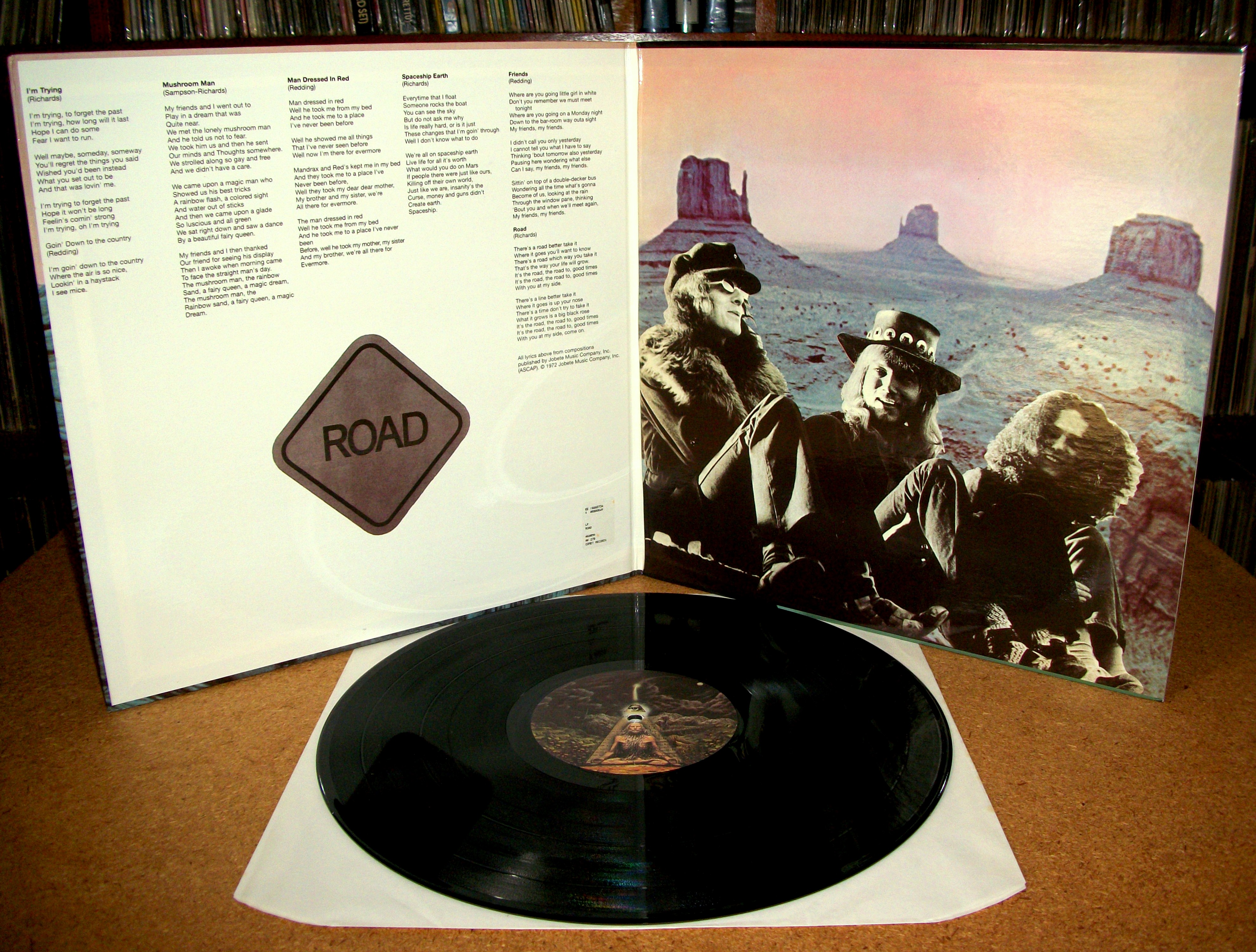
Reliquias olvidadas del Heavy: Road - Road (1972) feat-Noel Redding

Hoy traigo un disco que tenía pendiente desde hace mucho y es que subí el vídeo hace dos años a youtube y me acabo de fijar que tiene 140pico mil visitas y digo joder, necesita una entrada ya ese disco es muy bueno y a la gente además le ha flipado, lo descubrí realmente en 2014 en rockliquias: es un album del bajista de jimi hendrix noel redding en su carrera en solitario, puro sonido americano muy muy heavy psych, casi stoner, rock espacial y ácido. Un disco muy flashero como diría el chino oliveros de Club yonki de caballeros. Con este power-trio californiano a pesar de que Noel Redding intentó por todos los medios triunfar por sí mismo siempre sera recordado por ser el bajista de una de las formaciones de Jimi Hendrix, esa fue su cruz y naturalmente su privilegio.La banda realmente es medio británica medio americana, incluso casi podríamos decir que Irlandesa si tomásemos a Redding como referencia, su estilo es indudablemente muy americano y fué grabado en Arizona


En 1.972 Noel Redding, procedente de Jimi Hendrix Experience, y Rod Richards, de Rare Earth, deciden unir sus fuerzas y junto al batería Leslie Sampson, forman un "power trio" al más puro Hendrix, salvando naturalmente las distancias. No se sabe muy bien cual fue la razón pero no tuvieron demasiado éxito y su único disco no tuvo una gran trascendencia. Quizás su gran equivocación fue querer emular al gran Hendrix.


El disco comienza con "I´m Trying" pura psicodelia LSD,  le sigue "I´m Going Down To The Country" una tierna canción con aires hippies. En "Mushroom man" seguimos en linea con la psicodelía y continuamos con "Man Dressed in Red" donde el uso del Wah Wah llega a resultar algo excesivo. Los tres tema que quedan creo que son de lo mejorcito del disco, "Space Ship Earth", "Friends" con solo de batería incluido y por último "Road" donde Noel se luce con el bajo. Lo cierto que no es una maravilla pero se deja escuchar.
Rockliquias


Rod Richards- Guitarra
Noel Redding- Bajo
Leslie Sampson- Bateria


Pistas
A1 I'm Trying
A2 I'm Going Down To The Country
A3 Mushroom Man
A4 Man Dressed In Red
B1 Space Ship Earth
B2 Friends
B3 Road
Notas
Recorded at Record Plant Studios, Los Angeles, California, 1972.

180gr Vinyl release with a very thick and glossy cardboard gatefold sleeve.

↯↯↯↯↯


Salurocks!!